From run to print: how one marathon becomes wall art
Every run leaves a line behind. Most of them stay on a phone, three taps deep, until the next run buries them. This is what happens when you pull one back out: a real London Marathon, recorded on a watch on 26 April 2026, turned into something you can hang. Scroll, and run it with us.
The start line
09:40 on a Sunday morning. One runner, one watch, Blackheath, London.
Scroll to start the run
The run unfolds
The line moves the way the runner did: it races where they raced and drags where they dragged. 42.5 km in 2:56:01.
The hills
Tip the map and the ground appears. The route tops out at 48 m in the opening miles, then drops to the river by 5 km. That drop is where the fastest kilometre fell.
The splits
Every kilometre, timed. The brighter the orange, the quicker the running. Km 30 and 31 swing because tall buildings scramble the signal, not because the legs did.
Becoming a print
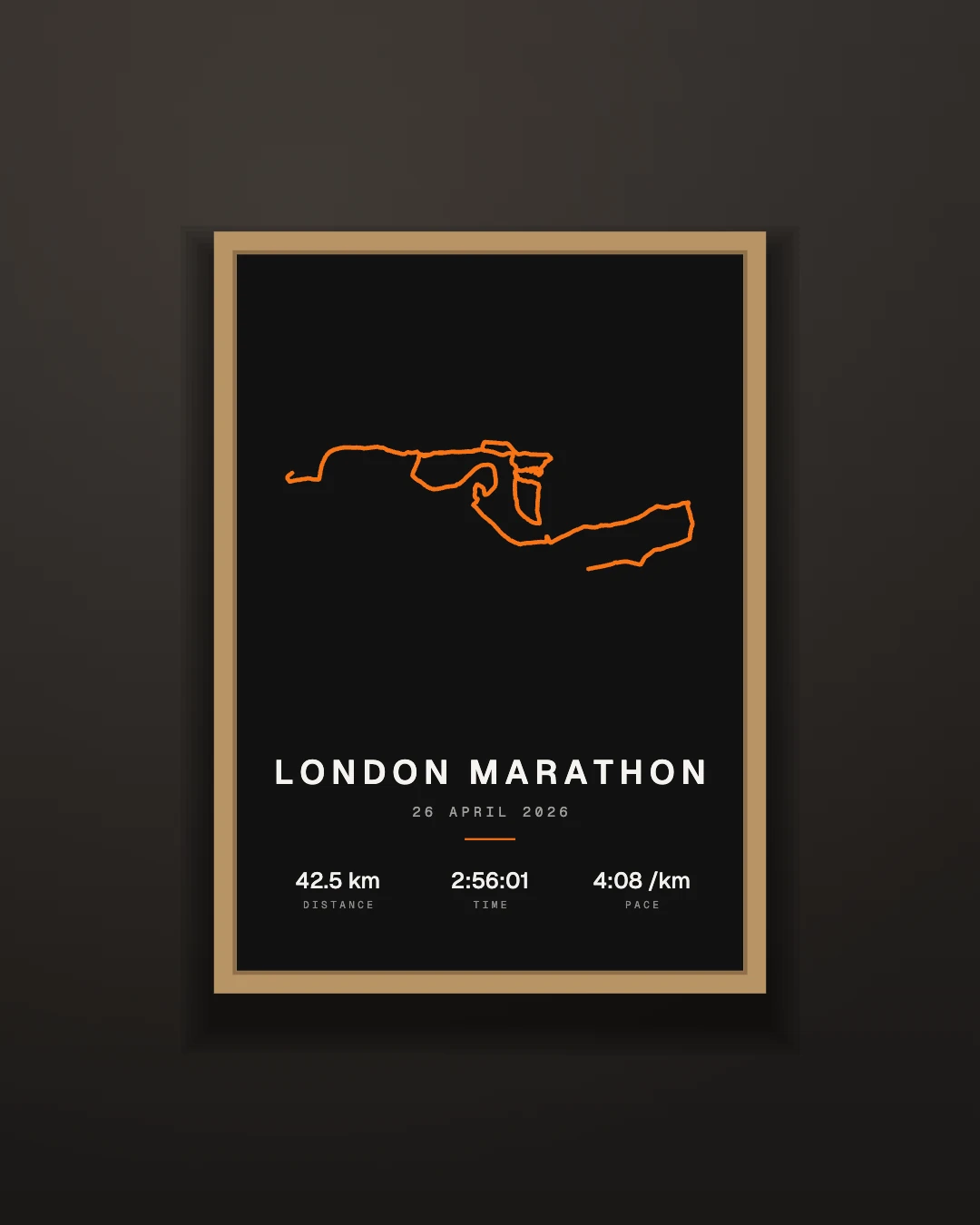
Then the numbers step back. What is left is the shape of the day, a title, and the three figures a runner never forgets.
Yours next
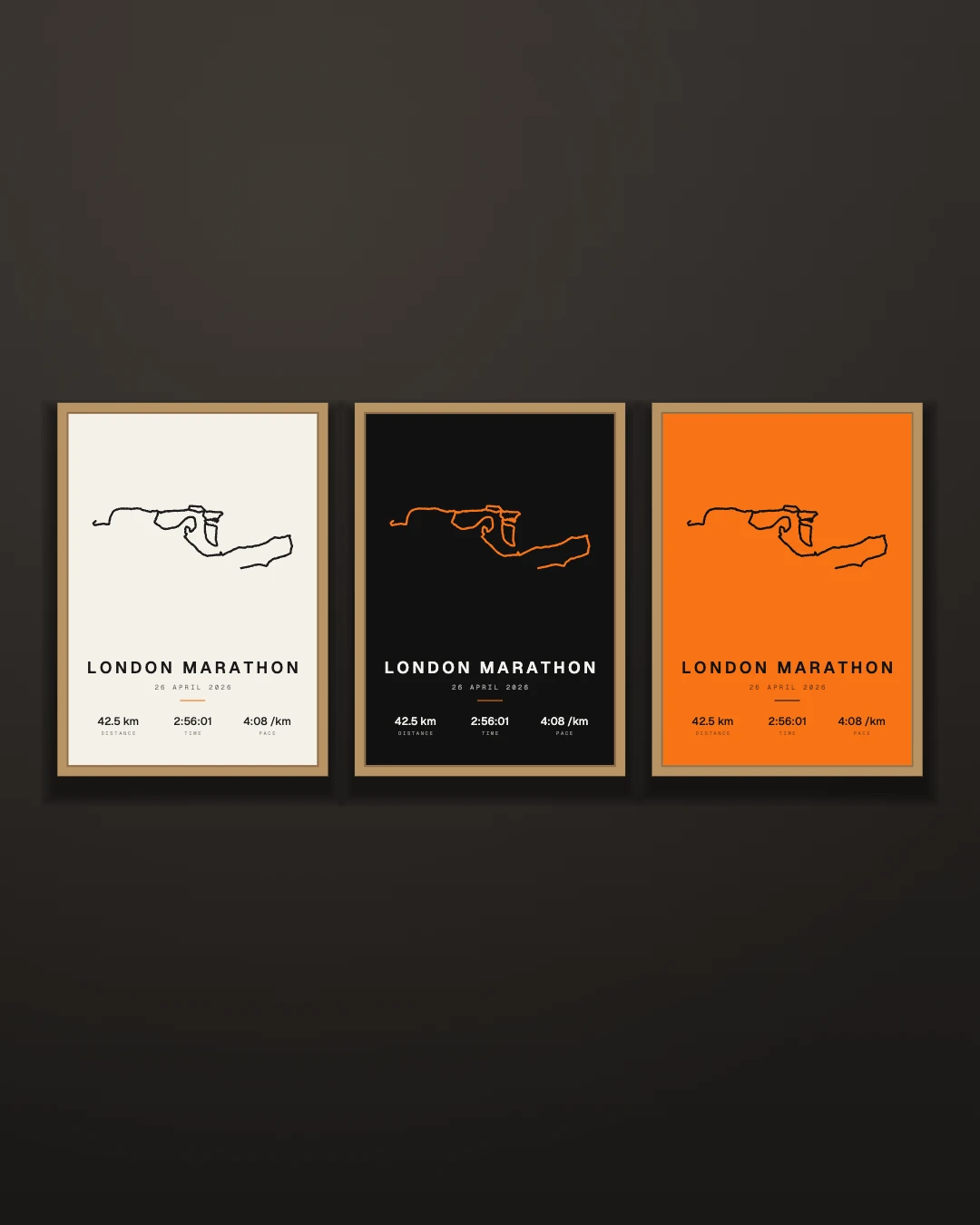
Same run, three moods. Yours is already sitting in your watch.
Your device asks for reduced motion, so this story is shown as still frames.
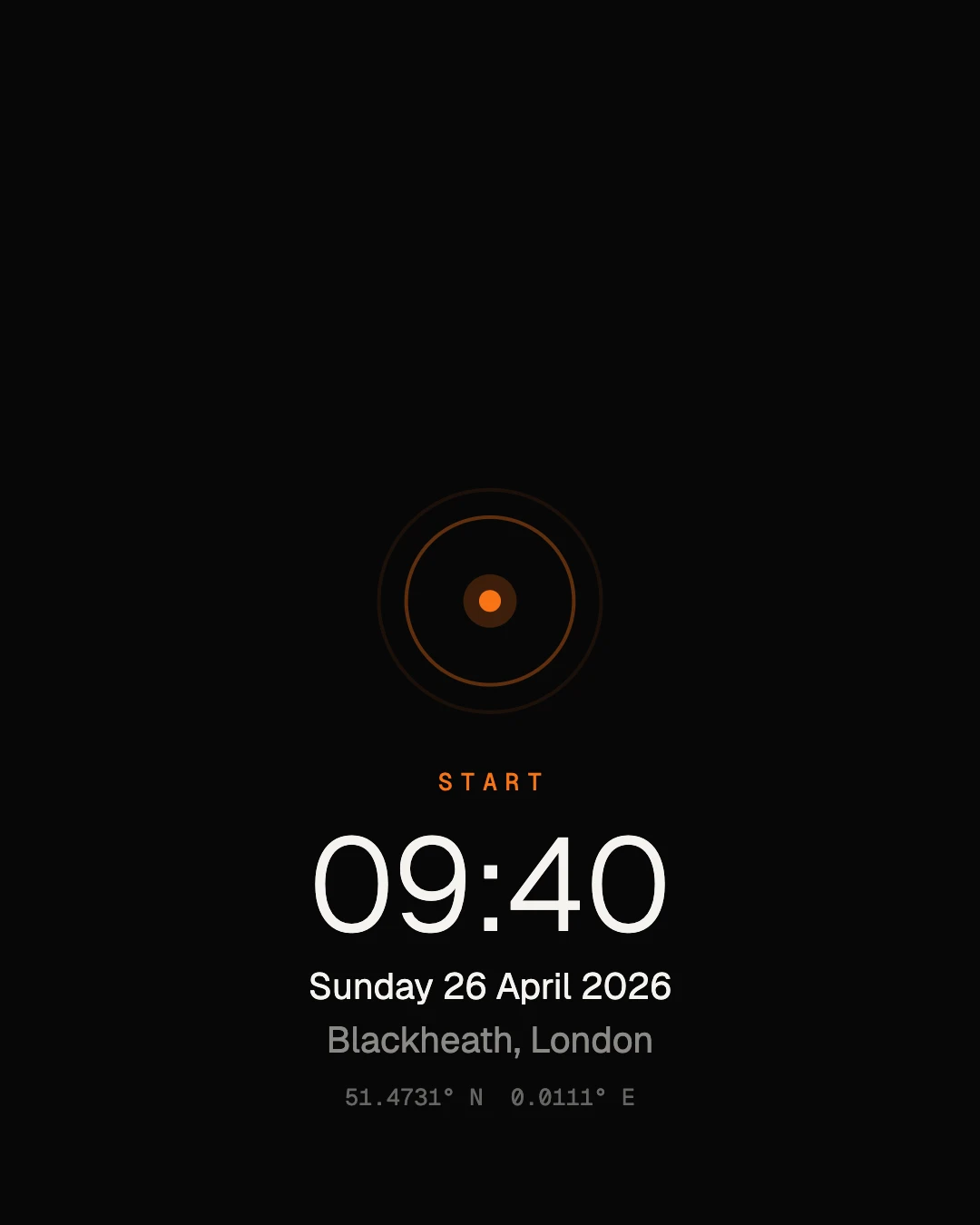
The start line
09:40 on a Sunday morning. One runner, one watch, Blackheath, London.
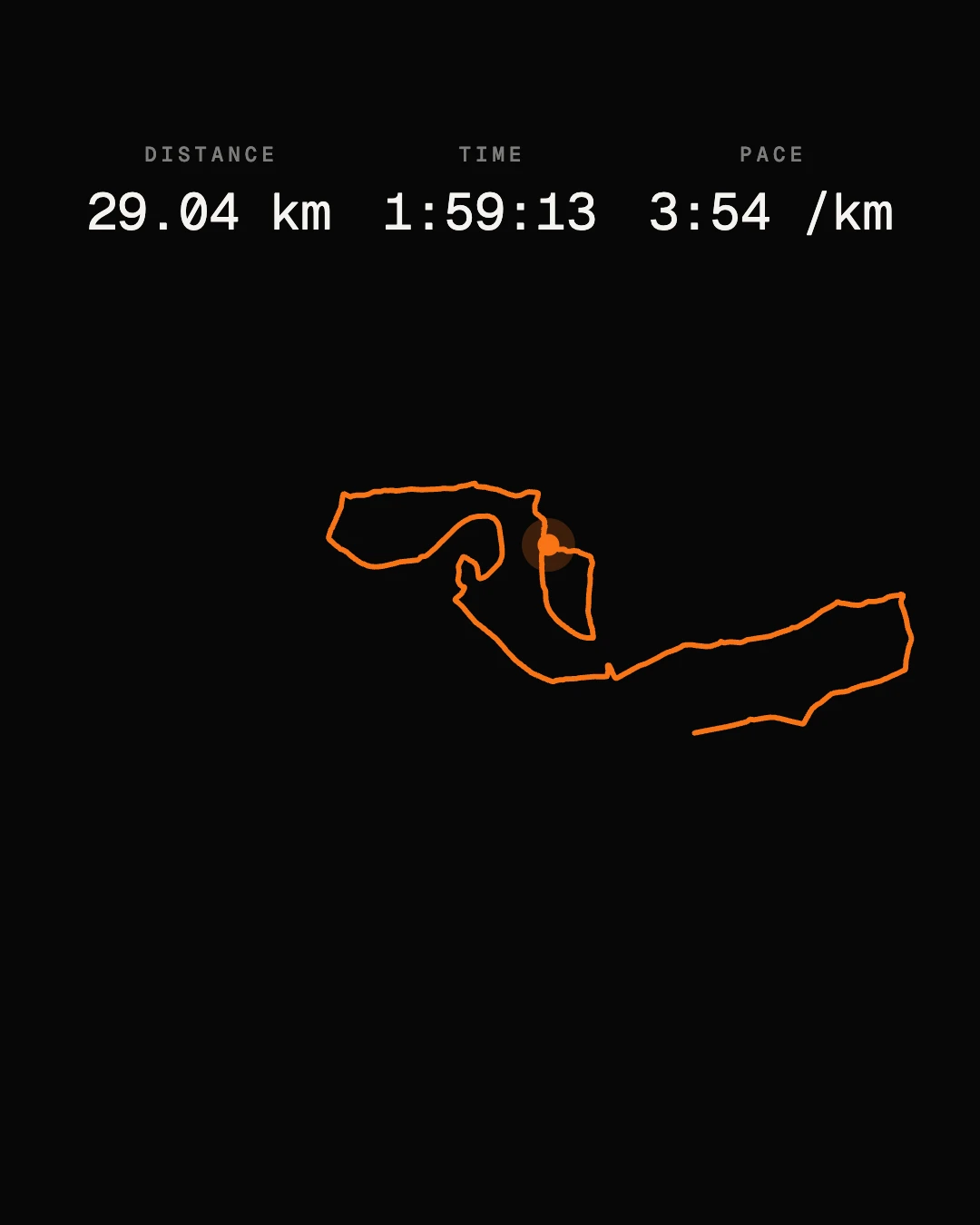
The run unfolds
The line moves the way the runner did: it races where they raced and drags where they dragged. 42.5 km in 2:56:01.
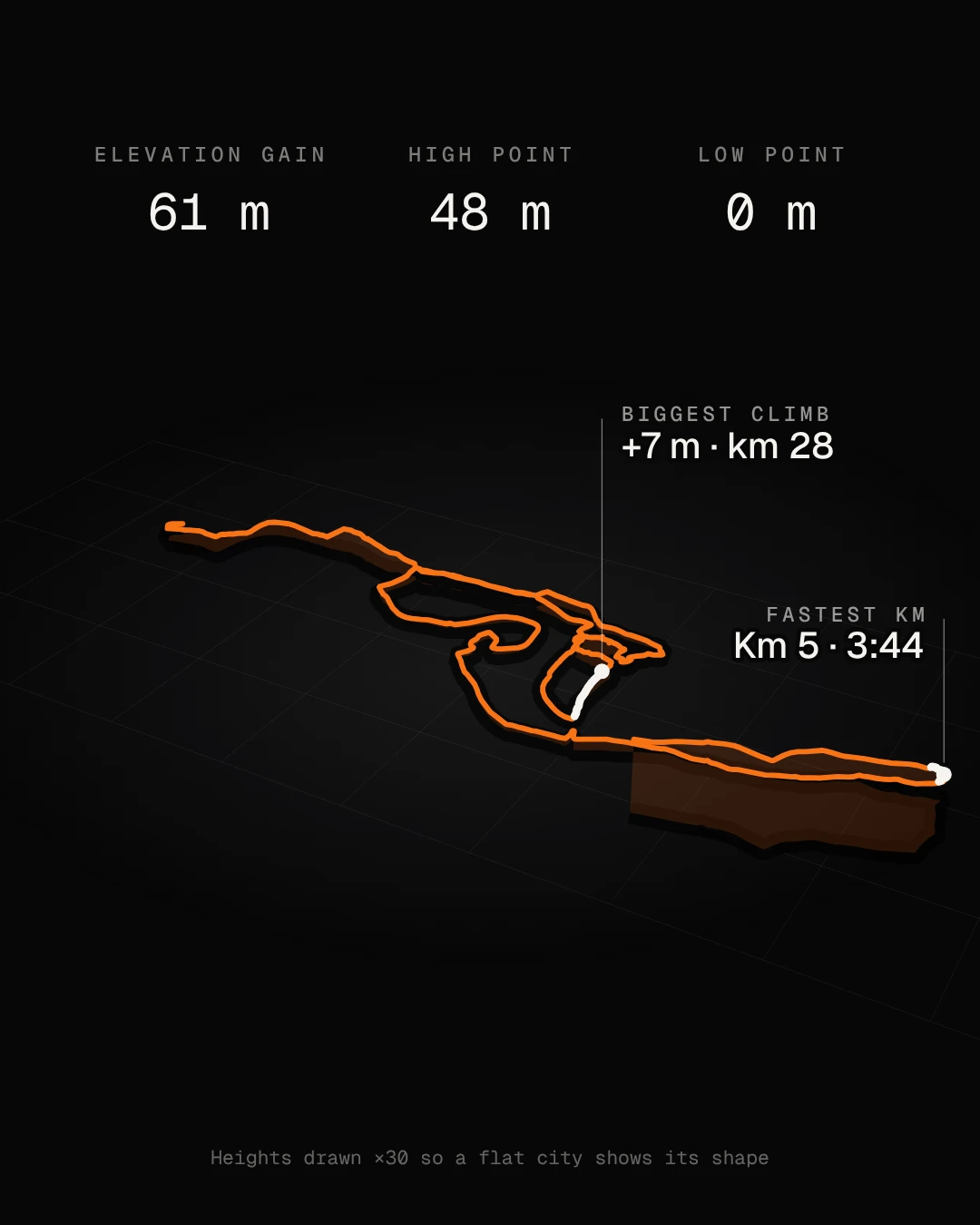
The hills
Tip the map and the ground appears. The route tops out at 48 m in the opening miles, then drops to the river by 5 km. That drop is where the fastest kilometre fell.
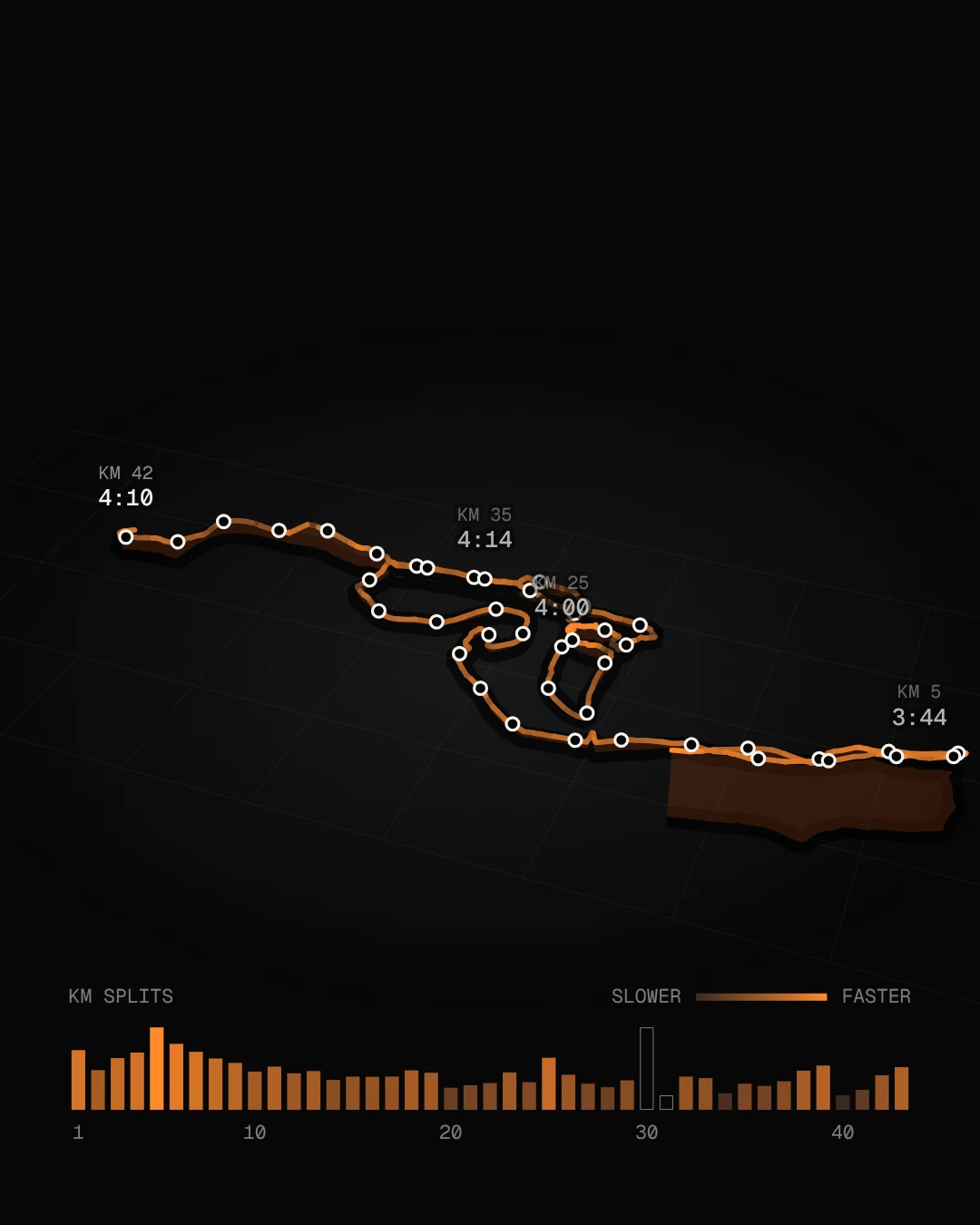
The splits
Every kilometre, timed. The brighter the orange, the quicker the running. Km 30 and 31 swing because tall buildings scramble the signal, not because the legs did.
Becoming a print
Then the numbers step back. What is left is the shape of the day, a title, and the three figures a runner never forgets.
Yours next
Same run, three moods. Yours is already sitting in your watch.
- Make yours
What the watch remembers
You remember the big things. The noise at Cutty Sark, the turn onto Tower Bridge, the long last mile. Your watch remembers the rest: a reading every few seconds for 2:56:01, each one a place, a time and a height.
Strung together, they show the quick 3:44 down the hill into Woolwich in the fifth kilometre, and the patient run of 4:10s through Rotherhithe when the job was simply to keep going. The watch even records its own mistakes. The towers at Canary Wharf bounce the signal around, so kilometre 30 reads 3:43 and kilometre 31 reads 4:46. Every London finisher has that pair somewhere.
Why the shape matters
Take the numbers away and a route is still recognisably yours. London is a long line from east to west that doubles back on itself, with the Docklands loop knotted in the middle. A parkrun might be three tidy laps. A fell race looks like a dropped thread. Most runners could pick their own races out of a pile from the shape alone.
That is why a route works on a wall when a finish time on its own does not. The line is the day. The time is the caption.
From file to frame
The print at the end of the story keeps three figures: 42.5 km, 2:56:01 and 4:08 per kilometre. Yes, 42.5. Watches measure London long, because nobody runs the blue line perfectly, and that is the number this runner saw when they stopped the clock.
Everything else is a choice. Dark paper or pale, a loud line or a quiet one, stats and an elevation profile on or off.
Your turn
Yours starts the same way. Export the GPX file from your watch app or connect Strava, pick the run, and choose how it should look. It takes a few minutes. The hard part you have already done.
How we measured it
Every distance, time and split is exactly as the watch recorded it. The heights needed one repair: in a city, elevation data reads rooftops as hills, so the raw file climbs 886 m around one of the flattest marathons there is. We removed any bump narrower than 800 m, which takes out the buildings and leaves the ground. The tilted view then draws that ground taller than life, so a flat course can show its shape.